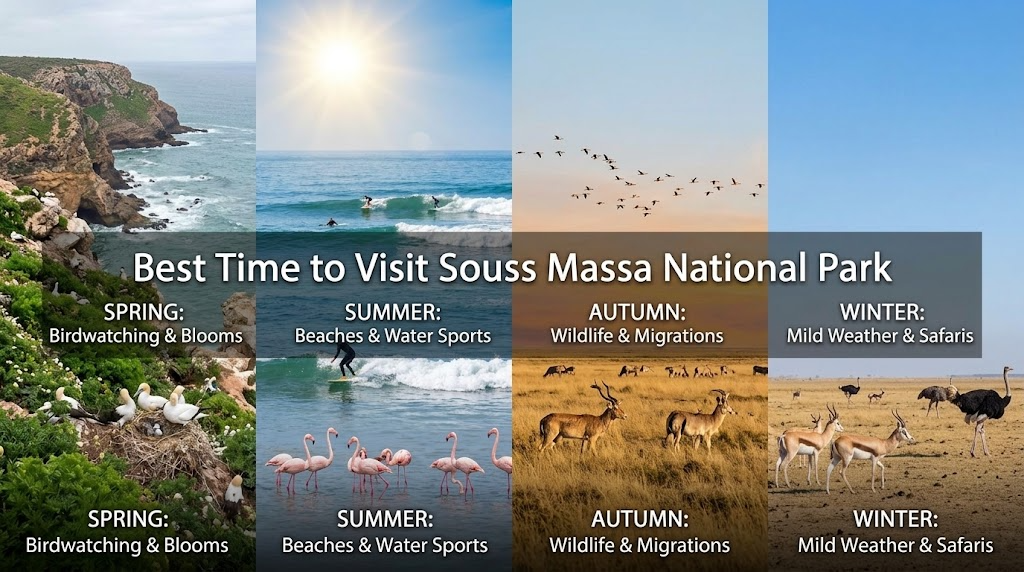
Ask five different people the best time to visit Souss Massa National Park and you will likely get five different answers, because the honest answer changes depending on what you actually came to see. A birder chasing wintering flamingos wants a different month than someone hoping to avoid the midday heat on a 4×4 route through the steppe.
The short version: the best time to visit Souss Massa National Park is between October and April, when temperatures are mild, migratory birds fill the estuary, and the park’s resident wildlife is at its most active. Here is exactly why, broken down month by month.
Quick answer: best time to visit Souss Massa National Park
For birdwatching and comfortable daytime temperatures, aim for October through April, with February through April offering the strongest overlap between mild weather and peak wildlife activity, including the tail end of the winter migration season and the build-up to the Northern Bald Ibis breeding period. If your priority is simply pleasant weather with fewer birds and quieter trails, September and October offer a good middle ground, warm but not scorching, with early migratory arrivals already showing up along the estuary.
Souss Massa National Park weather and wildlife by season
Agadir and the surrounding Souss Massa coastline have a mild, semi arid climate year round, but the difference between a comfortable morning safari and a punishing midday hike comes down entirely to which month you pick.
Winter: December to February
Winter is the coolest, wettest, and in many ways the richest wildlife season. Daytime highs sit around 20 to 21 degrees Celsius, dropping to 8 to 12 degrees overnight, and this is also when the bulk of the year’s modest rainfall falls, so pack a light layer for evenings and early mornings.
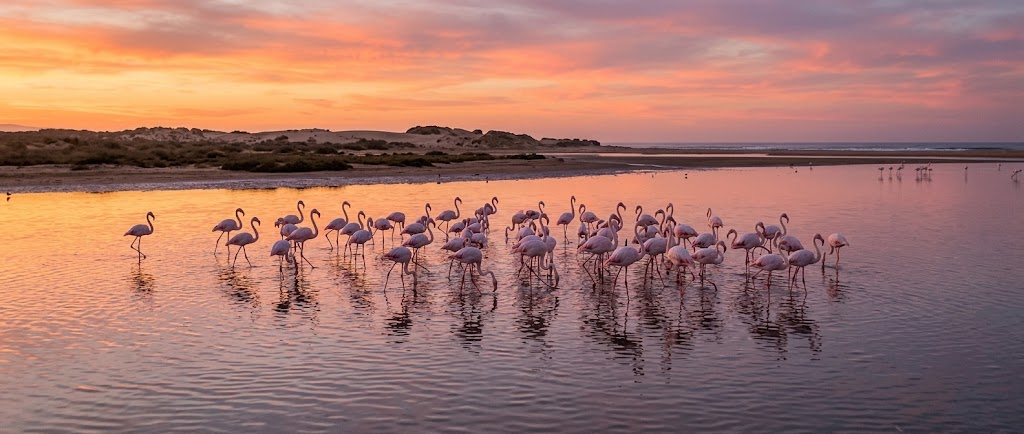
Souss Massa National Park in December brings the wettest weather of the year, but also some of the best birding, with wintering flamingo, osprey, and other migratory waterbirds well established around the Oued Massa estuary.
Souss Massa National Park in January is the coldest month, mild by most standards but genuinely cool in the early morning, exactly when wildlife activity peaks, making it a strong month for a dawn birdwatching tour.
Souss Massa National Park in February sees temperatures beginning to climb slightly while winter migrants are still present in strong numbers, a genuinely excellent window for birders who want mild days without the crowds of spring.
Spring: March to May
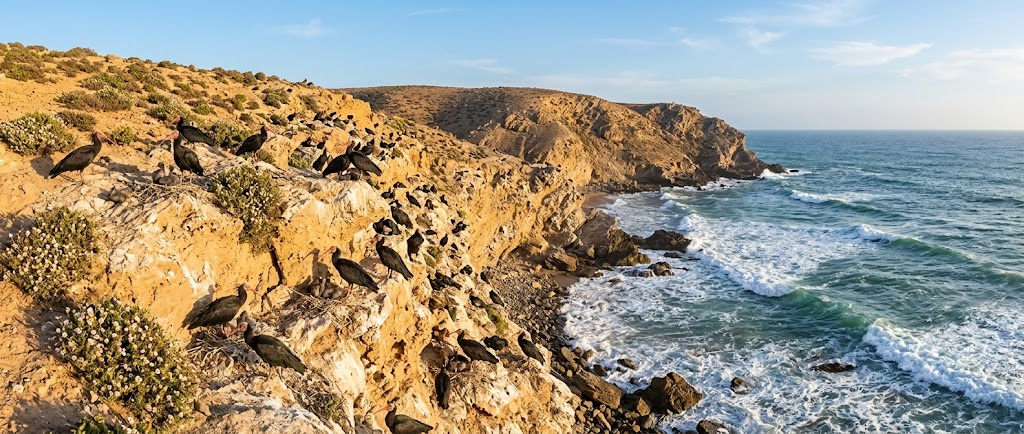
Spring is widely considered the single best season to visit, combining comfortable temperatures with the tail end of the migration season and the build-up to the Northern Bald Ibis breeding period on the park’s coastal nesting cliffs.
Souss Massa National Park in March stays mild and increasingly green after winter rains, with wildflowers appearing across the steppe and strong birding conditions still in effect.
Souss Massa National Park in April offers some of the most pleasant weather of the entire year, warm but not yet hot, and is generally regarded as peak season for both wildlife viewing and general comfort.
Souss Massa National Park in May begins to warm noticeably, still very manageable for a morning or afternoon visit, with the steppe’s spring bloom typically fading as the dry season approaches.
Summer: June to August
Summer is Souss Massa’s hottest and driest stretch, with highs regularly reaching 26 to 28 degrees Celsius inland and occasional heat spikes well above that during desert wind events. The Atlantic coastal breeze keeps the immediate shoreline noticeably cooler than the interior steppe, which is worth factoring into how you plan your day.
Souss Massa National Park in June marks the start of the dry season, hot by midday but still workable with an early morning start, before the heat builds.
Souss Massa National Park in July is one of the driest and warmest months of the year, best tackled with a dawn or late afternoon visit rather than a midday excursion.
Souss Massa National Park in August continues the same hot, dry pattern as July, with the coastal estuary areas offering some relief from the heat compared to the open steppe further inland.
Autumn: September to November
Autumn brings a gradual cooldown and marks the return of migratory birds heading south for the winter, making it a genuinely strong alternative to spring for anyone who wants milder crowds without sacrificing wildlife interest.
Souss Massa National Park in September still runs warm, similar to peak summer, but early migratory arrivals begin appearing at the estuary toward the end of the month.
Souss Massa National Park in October is widely regarded as one of the best all-round months, comfortable temperatures combined with the start of the main winter migration season.
Souss Massa National Park in November continues that same comfortable trend, cooler and increasingly wet as the year’s rainy season begins, with migratory bird numbers building steadily toward their winter peak.
Best time of year to visit Souss Massa National Park for birdwatching
For birdwatching specifically, October through April is the clear answer. This window captures the full winter migration season, when flamingo, osprey, marbled duck, and dozens of other migratory species pass through or settle at the Oued Massa estuary, and it overlaps with the Northern Bald Ibis at its most visible and active on the park’s coastal nesting cliffs. Early morning, generally between 7 and 10 AM, consistently offers the best activity and light regardless of which month you choose, since most species are most active before the day’s heat sets in.
When do Northern Bald Ibis nest in Souss Massa National Park?
The Moroccan colony does not migrate, so the Northern Bald Ibis can technically be seen at Souss Massa year round, but breeding and nesting activity on the coastal cliffs is concentrated mainly through late winter and spring, roughly January through June, making that stretch the most reliable window to see nesting behavior specifically, on top of simply spotting the birds foraging inland.
Guided tours available for Souss Massa National Park
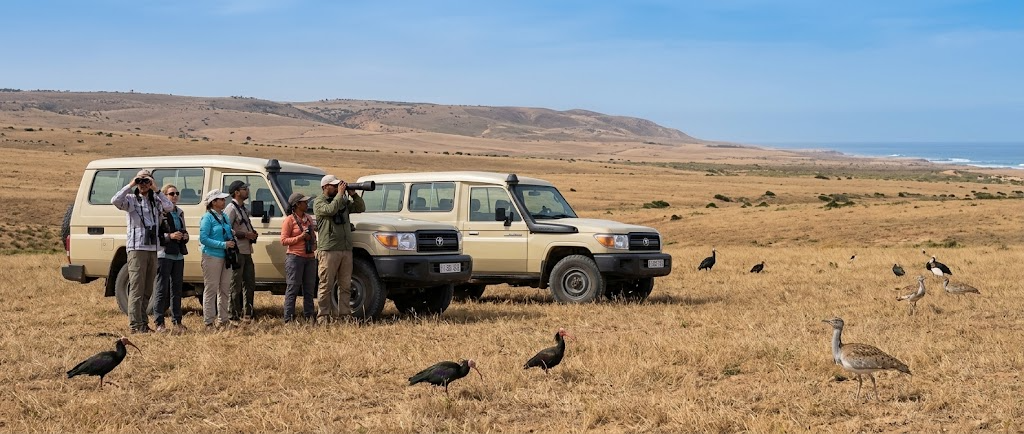
A range of guided tours operate across the park, generally structured as half day or full day excursions combining birdwatching along the estuary, a 4×4 route through the steppe reserve to see reintroduced species such as Scimitar Oryx, Addax, and Dorcas Gazelle, and time at the coastal cliffs where the Northern Bald Ibis nests. Most tours run year round, with departure times shifted earlier in the day during summer to avoid the midday heat and later in winter to take advantage of the warmer midday hours.
How to book a birdwatching trip in Souss Massa National Park
The most straightforward way to book is through an established local tour operator based in Agadir, since a knowledgeable guide dramatically improves your odds of seeing the park’s more elusive species and can time the outing around the specific season and tide conditions that affect bird activity at the estuary. Booking a few days ahead is generally sufficient outside major holiday periods, though early morning departure slots, which offer the best wildlife viewing, tend to fill first.
Plan your visit
If you are planning a trip from Agadir, this guided national park tour runs year round and can be timed to match whichever season fits your priorities, peak migration season for the strongest birdwatching, or the milder shoulder months for a quieter, more comfortable visit. For full opening hours, entrance fees, and directions, see the park’s visitor information.