For nearly fifty years, the sight of a wild ostrich nest in Morocco simply did not exist. The species that once strode across the country’s southern plains in large numbers had vanished entirely from the wild, hunted and pushed out until it survived only in a handful of protected pockets scattered across the Sahara. Then, in 2024, something happened that almost nobody expected to see in their lifetime.
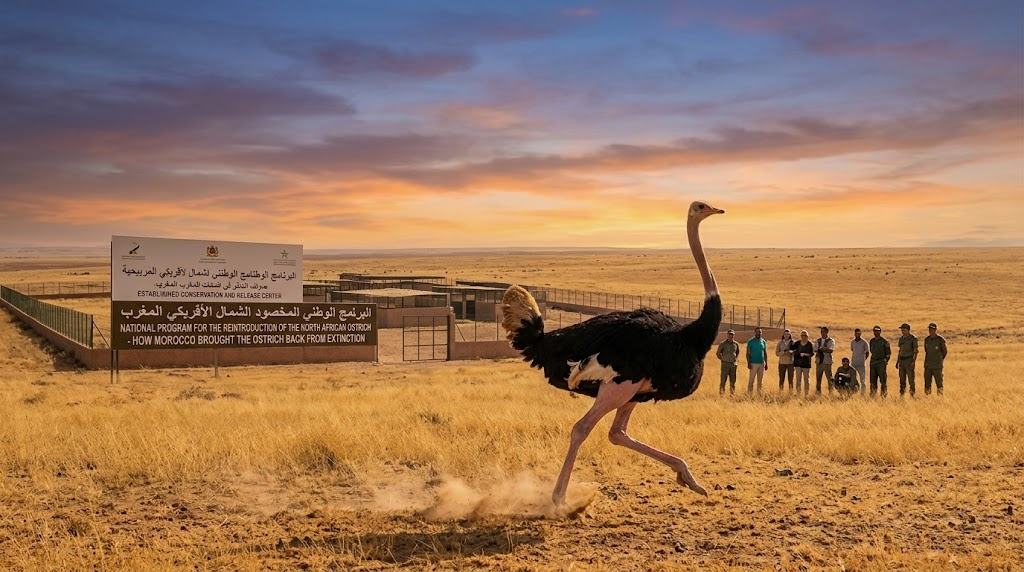
This is how Morocco brought the ostrich back from extinction, one of the most significant and least publicized conservation comebacks in North Africa.
A bird once common across the Sahara
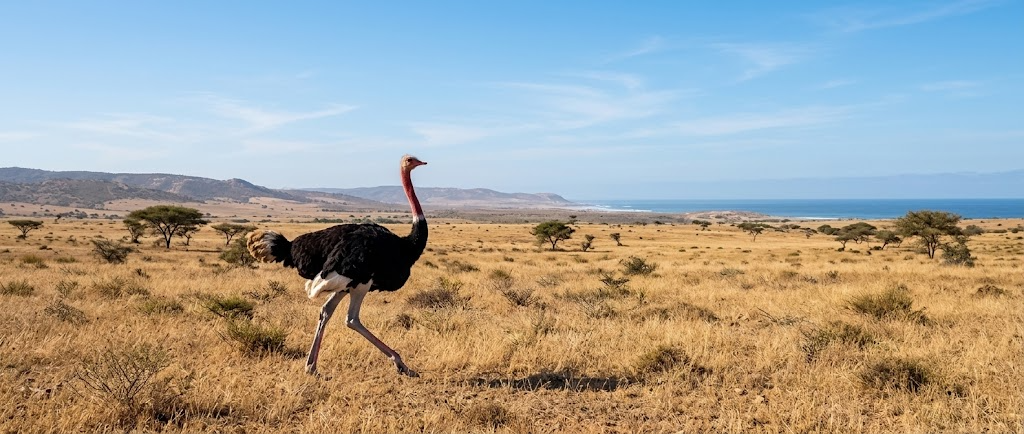
The North African Ostrich (Struthio camelus camelus), also called the red-necked ostrich, once ranged across nearly the entire width of the continent’s northern belt, from Senegal and Mauritania in the west, through the Sahel, and east across Chad, Sudan, and Egypt, including southern Morocco. It is the largest of all ostrich subspecies and the largest living bird on the planet, instantly recognizable by its pink to red neck and legs. For centuries it was a genuine part of the Saharan landscape, not a rarity.
How the ostrich disappeared from Morocco
The decline was fast and thorough. Hunting pressure, both for feathers during earlier centuries and later for meat and general persecution, combined with habitat loss and disturbance, steadily eliminated the species from one part of its range after another. By the 1970s, wild ostriches had disappeared from Morocco entirely, and across much of the wider Sahelo-Saharan region the story was similarly grim, with populations collapsing to isolated, fragmented pockets in a handful of countries. For a generation of Moroccans, the ostrich became something known only from old accounts and historical records, a bird that used to be here.
The 1996 reintroduction: 30 birds from Chad
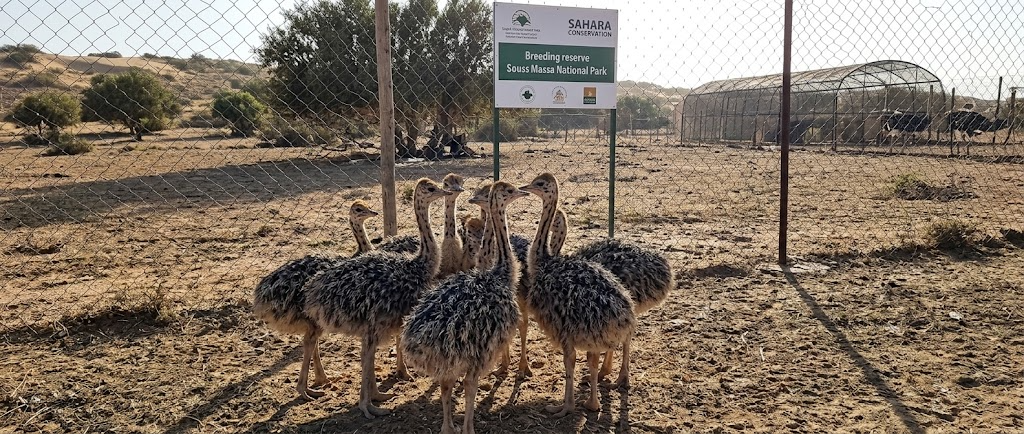
The turning point came in 1996, when conservationists transferred approximately 30 North African Ostriches from Chad to Souss Massa National Park to found a new, protected breeding population on Moroccan soil. This was not a casual release. It required identifying source birds from a genetically appropriate population, establishing secure, predator-controlled reserve space, and committing to years of monitoring before anyone could call the effort a success. According to Sahara Conservation’s account of the program, this initial Moroccan population became a cornerstone of the species’ recovery strategy across its entire range, not just a local curiosity.
From 30 birds to a growing population
The results compounded steadily over the following decades. By the late 2000s, the founding group of around 30 birds had grown to roughly 150 individuals, already the largest semi-captive population of North African Ostrich anywhere in the Sahelo-Saharan region. That growth continued, and today more than 300 individuals live across several protected sites in Morocco, a population increase of ten times the original founding group achieved almost entirely within a single protected national park system. Morocco’s program became a genuine proof of concept, evidence that a functionally extinct regional population could be rebuilt given secure habitat, patience, and sustained institutional commitment.
2024: the first wild nest in fifty years
The real milestone arrived in 2024. For the first time since the species vanished from the country in the 1970s, a North African Ostrich built a nest and successfully hatched chicks entirely on its own in the wild inside Souss Massa National Park, without direct human intervention in the nesting process itself. Ornithological researchers covering the event, including detailed field reporting on the nesting record, described it as a genuinely historic moment for Moroccan conservation, proof that the reintroduced population had crossed a critical threshold from a managed, closely monitored group into a population capable of reproducing entirely under its own natural behavior.
Why this reintroduction matters
Species reintroductions fail more often than they succeed, particularly for large, slow-breeding animals that need extensive territory and long-term protection from poaching and habitat loss. Morocco’s ostrich program stands out precisely because it worked, and worked at a scale few similar African conservation efforts have matched. The 2024 wild nesting record is significant beyond Morocco’s borders too, since the eastern and central populations of the same subspecies across much of the Sahel remain severely depleted and fragmented, restricted mainly to isolated pockets in Chad, Cameroon, and the Central African Republic. Morocco’s population, secure, growing, and now confirmed to be self-sustaining in the wild, represents one of the strongest remaining hopes for the subspecies’ long-term survival anywhere on the continent.
Where to see the ostrich recovery for yourself
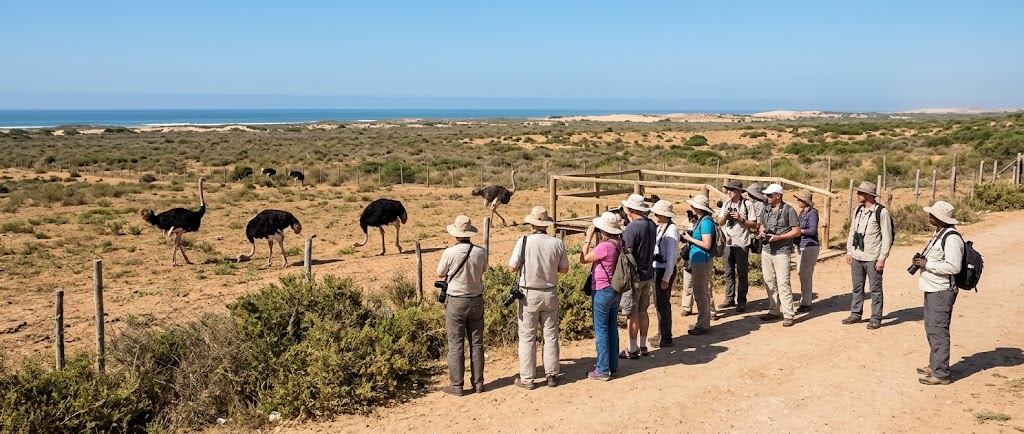
Souss Massa National Park remains the place where this entire story began, and it is still one of the only realistic places in the world to see this subspecies moving, foraging, and now nesting in conditions close to its natural range. The park’s steppe reserve is shared with the same long-running reintroduction effort supporting Scimitar Oryx, Addax, and Dorcas Gazelle, making a single visit a chance to see several of North Africa’s most significant conservation comebacks in one place.
Plan your visit
Full details on visiting the park, including hours, entrance information, and how to get here, are available on the park’s visitor information page.
If you are planning a trip from Agadir, this guided national park tour covers the steppe reserve where the ostrich population lives, along with the park’s other reintroduced species, in a single half day or full day excursion with a local guide.