Most tourism content about a national park is written to sell you on it. This one is not going to do that. Instead, here is a genuinely honest answer to the question people actually ask before booking anything, is Souss Massa National Park worth visiting, or is it just another stop added to a Morocco itinerary because it happened to be nearby.
The short answer is yes, Souss Massa National Park is worth visiting, but only if you go in with the right expectations. Here is exactly what those expectations should be.
The quick answer: yes, but set the right expectations
Souss Massa National Park is not a dramatic, sweeping wilderness like a Kenyan savanna or a Namibian dune sea, and if that is what you are picturing, you may leave underwhelmed. What it actually offers is something more specific and, for the right visitor, more interesting, a working conservation site protecting one of the rarest birds on the planet, alongside a genuine reintroduction success story for several large mammals that had disappeared from Morocco entirely. It rewards visitors who come curious about that story rather than expecting a big-ticket safari spectacle.
What makes Souss Massa National Park genuinely worth visiting
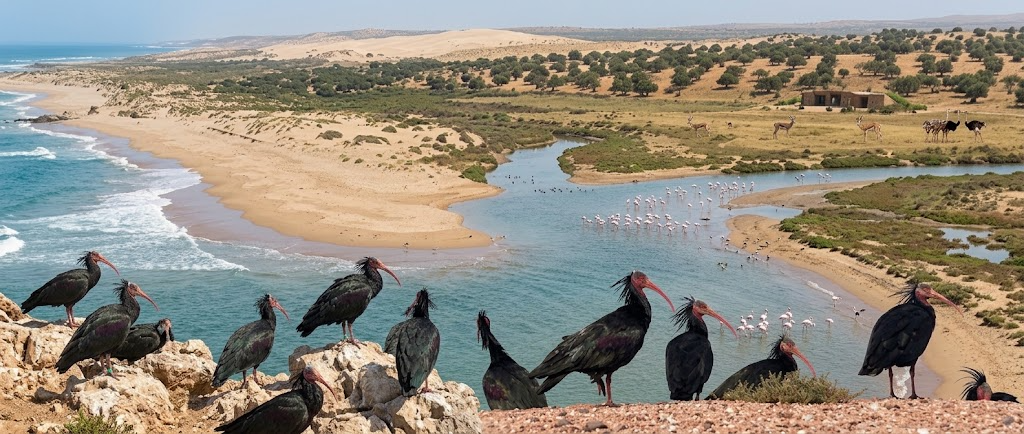
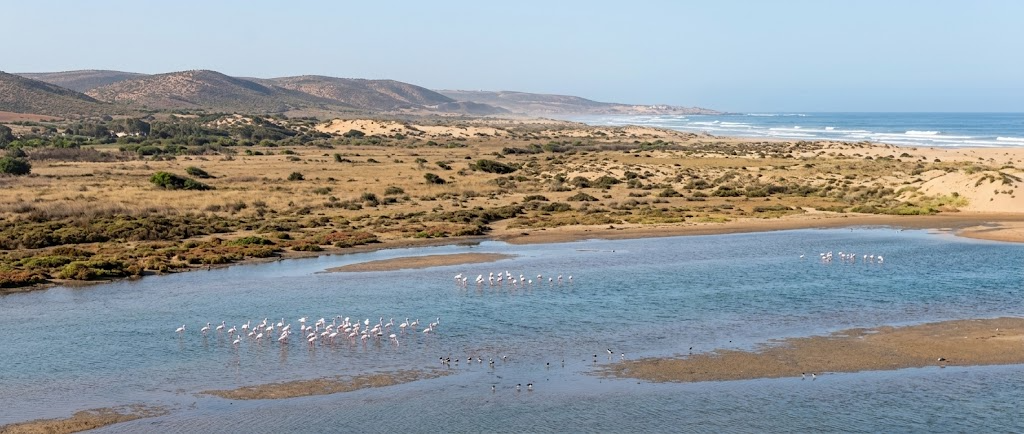
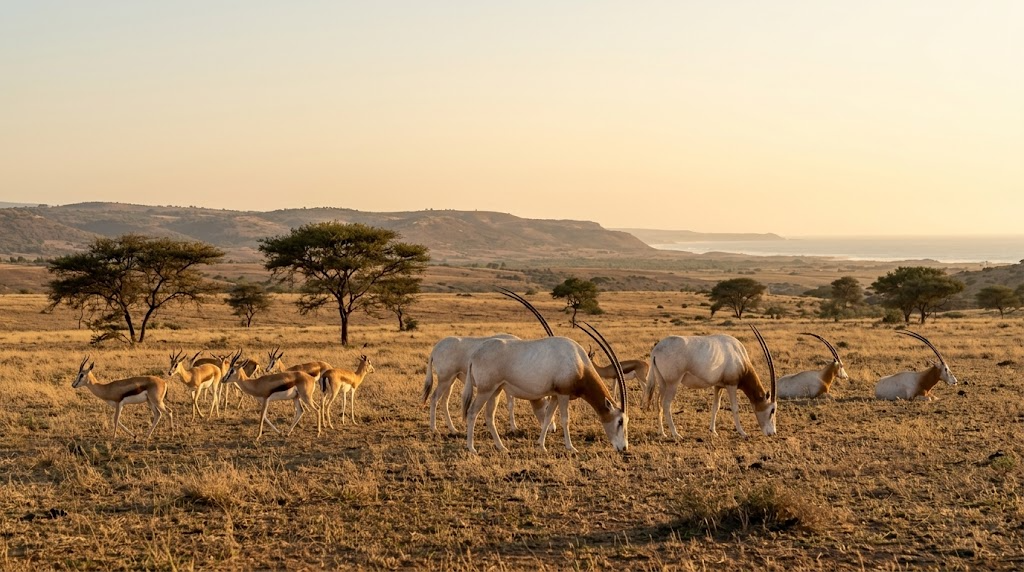
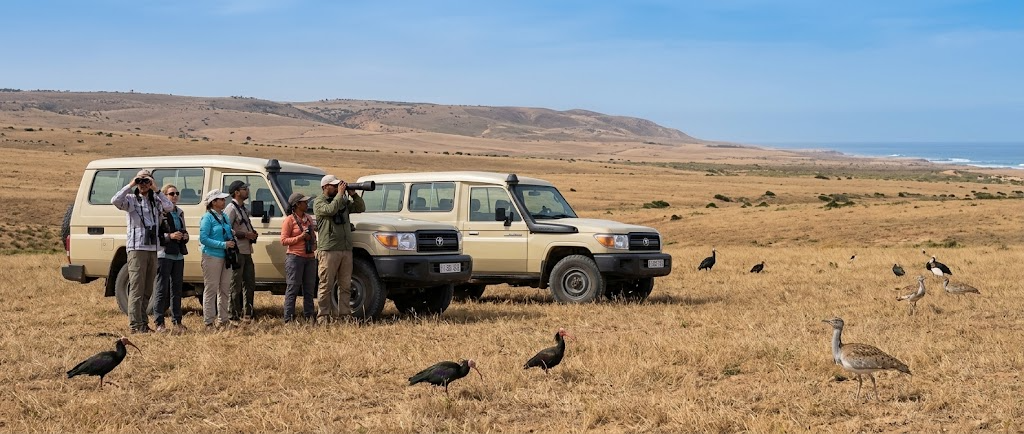
The single strongest reason to visit is the Northern Bald Ibis. This is one of only two places on earth where the species still breeds in the wild, and seeing it on its actual coastal nesting cliffs, rather than in a zoo enclosure, is a genuinely rare wildlife experience most visitors will never have the chance to repeat anywhere else. Beyond the ibis, the park’s steppe reserve holds a real conservation success story, reintroduced Scimitar Oryx, Addax, and Dorcas Gazelle, species that had vanished from Morocco’s wild landscape and are now recovering here, and in 2024 the park recorded its first wild North African Ostrich nest in roughly fifty years. The Oued Massa estuary adds a second dimension entirely, a genuinely important wintering site for flamingo, osprey, and dozens of other migratory bird species. For anyone with even a casual interest in wildlife or conservation, this combination is difficult to find in one place anywhere else in North Africa.
What Souss Massa National Park is not
To be equally honest about the other side, this is not a park built for dramatic, guaranteed, close-up megafauna encounters. You will not see large predators, and most of the reintroduced mammals live within fenced or semi-managed reserve areas rather than roaming freely across open, unfenced wilderness, an important and genuinely different setup compared to an East or Southern African safari park. The landscape itself is dry steppe, coastal dune, and wetland rather than lush greenery, beautiful in its own right but not visually dramatic in the way some travelers expect from the word “national park.” Wildlife sightings, particularly of specific species, are also not guaranteed on any single visit, since birds move with the seasons and mammals within reserve areas are still genuinely wild in behavior, not staged for viewing.
Who Souss Massa National Park is not for
If your Morocco trip is built entirely around dramatic scenery, markets, and cities, and wildlife is only a minor curiosity, a half day here may feel like a detour rather than a highlight. It is also not the right stop for anyone expecting the density and visibility of a classic African safari, since sightings here reward patience and a decent guide far more than sheer volume of animals. Families traveling with very young children who need constant activity may also find the pace, quiet observation, gradual walking, waiting for birds to appear, less engaging than a more hands-on attraction.
What a typical visit actually looks like
Most visits run as a half day or full day guided excursion from Agadir, combining a stop at the Oued Massa estuary for birdwatching with a 4×4 route through the steppe reserve to see the reintroduced mammal species. Morning departures consistently offer the best wildlife activity and the most comfortable temperatures, particularly outside the winter months. A knowledgeable local guide makes a genuinely significant difference here, both for spotting more elusive species and for understanding the conservation story behind what you are looking at, since without that context, a distant bird on a cliff face is just a bird, not evidence of one of the most important wildlife recoveries on the continent.
Is it worth it as a day trip from Agadir?
Yes, and this is arguably the park’s best use case. At roughly 45 to 60 minutes from Agadir, it is close enough to fit comfortably into a single day without eating into a longer Morocco itinerary, and it offers a genuinely different experience from the beach, souks, and city sightseeing that dominate most Agadir stays. For travelers based in Agadir for any meaningful stretch of time, it is one of the more distinctive half day options available in the region, offering something coastal resorts and medina tours simply cannot.
Our honest verdict
Souss Massa National Park is genuinely worth visiting for anyone with real curiosity about wildlife, conservation, or birdwatching, and it offers an experience, seeing the last wild Northern Bald Ibis colony on earth, that is not replicated anywhere else in the world. It is not the right stop for someone chasing dramatic safari-style spectacle or expecting guaranteed, close-range animal encounters at every turn. Go in with accurate expectations, ideally with a guide who can bring the conservation story to life, and this becomes one of the more meaningful and distinctive experiences available near Agadir, rather than just another box ticked on a Morocco itinerary.
Plan your visit
Full details on visiting, including hours, entrance fees, and how to get here, are available on the park’s visitor information page.
If you are planning a trip from Agadir, this guided national park tour covers both the estuary and the steppe reserve in a single half day or full day excursion with a local guide who can help you get the most out of the visit.