Somewhere in a Roman senator’s dining room two thousand years ago sat a single wooden table worth more than most people’s entire estate, its rippling, honey colored grain considered more valuable than solid silver. That wood came from one tree, native to a narrow strip of North Africa, and the same species is still carved into boxes and bowls in Moroccan workshops today.
Barbary Thuya is one of Morocco’s most historically significant native trees, and the woodlands it grows in sit within the same broader southwestern region as Souss Massa National Park.
What is Barbary Thuya?
Barbary Thuya (Tetraclinis articulata), also known as sandarac tree, arar, citron wood, or Mediterranean alerce, is a slow-growing evergreen conifer and the only species in its genus, Tetraclinis, within the cypress family Cupressaceae. It typically grows 6 to 15 meters tall, occasionally reaching 20 meters, with a distinctive multi-stemmed, coppicing habit, flattened sprays of scale-like leaves rather than needles, and small, angular cones that ripen with a striking pale, waxy bloom. Its wood, especially the dense, richly patterned burl found at the base of old trunks, has been prized since antiquity for fine woodworking, a reputation that continues to shape both the species’ economic importance and its conservation challenges in Morocco today.
Where does Barbary Thuya grow naturally?
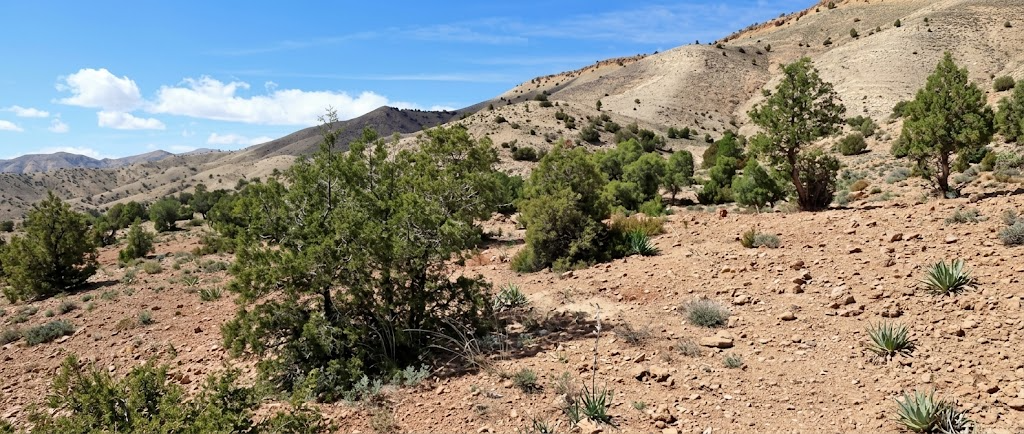
Barbary Thuya is native almost entirely to the Atlas Mountains region of Morocco, Algeria, and Tunisia, with two small outlying populations found further afield, one in Malta and another near Cartagena in southeastern Spain. Within Morocco, it forms extensive woodlands particularly across the Essaouira region, where it grows alongside the country’s famous argan forests in a landscape recognized internationally through UNESCO’s Man and Biosphere program. It favors low to moderate altitudes in a hot, dry, subtropical Mediterranean climate, thriving on the kind of poor, rocky, well drained soils common across much of southwestern Morocco, including the wider bioregion surrounding Souss Massa National Park.
What is the difference between Thuya and Cedar?
Despite sharing a certain visual resemblance and both being valued as ornamental and timber conifers, Barbary Thuya and true cedar belong to entirely different plant families. Barbary Thuya sits in the cypress family, Cupressaceae, with flattened, scale-like foliage arranged in open sprays, while true cedars, genus Cedrus, belong to the pine family, Pinaceae, and are easily identified by their distinctive clusters of needle-like leaves growing from short woody spurs along the branch, quite different from Thuya’s flattened scales. The two also differ significantly in their native range and typical uses, true cedars are widely known for their aromatic, rot-resistant lumber used in construction, while Barbary Thuya is prized specifically for its dense, richly figured burl wood used in fine decorative woodworking rather than structural timber.
Is Barbary Thuya the same as Thuja?
No, and this is one of the most common points of confusion with the species. Despite the near-identical name, Barbary Thuya, genus Tetraclinis, is not the same genus as Thuja, the group that includes the Western Redcedar and various ornamental arborvitae widely planted across North America and Asia. The two genera are related within the broader cypress family and share a superficially similar appearance, but they are botanically distinct, with different native ranges, growth habits, and wood properties. The overlapping common names are largely a historical accident of translation and trade terminology rather than a reflection of close taxonomic identity.
Is Barbary Thuya endangered?
The species is currently listed as Vulnerable on the IUCN Red List, reflecting a genuine, ongoing decline across parts of its range. The primary driver is the harvesting of its root burl for the decorative woodworking trade, a practice that kills the tree outright and has led to what researchers and conservation organizations describe as an unsustainable, mass deforestation pattern in parts of Morocco. Overgrazing compounds the problem, since livestock frequently kill young coppice regrowth before it can reach a height safe from browsing, preventing forests from naturally regenerating even where mature trees are protected.
Conservation of Tetraclinis articulata forests
Morocco’s Barbary Thuya woodlands, particularly around Essaouira, sit within a landscape recognized under UNESCO’s Man and Biosphere program alongside the region’s argan forests, reflecting their significance as both an ecological and cultural resource. According to conservation research into the region, these woodlands support important biodiversity, including endemic species such as the caracal, while also sustaining local livelihoods through timber, resin, and woodworking traditions. Despite that recognition, formal sustainable forestry certification such as FSC or PEFC remains unavailable for Thuya wood, and conservation efforts continue to focus on regulating burl harvesting, protecting young coppice regrowth from overgrazing, and supporting alternative, less destructive sources of income within thuya-dependent communities.
What is the history of Thyine wood?
Few timbers carry a documented history as old or as prestigious as this one. References to the wood appear as far back as Homer, writing around 700 BC, and later in the accounts of the Roman historian Pliny the Elder, who described its Greek names thyon and thya. Romans knew it as citrus wood and prized burl-cut tables, called mensae citreae, as extraordinary status symbols, with wealthy collectors reportedly paying sums that rivaled or exceeded the price of fine silver or even gold for a single exceptional table. The wood’s fame persisted long enough to be recorded in the Book of Revelation, where thyine wood appears among a list of luxury trade goods, cementing its reputation across the ancient Mediterranean world as one of the most coveted decorative timbers known.
How to identify authentic thuya burl wood
Genuine Thuya burl has a distinctive look that is difficult to convincingly fake. Look for a dense, swirling, knotted grain pattern filled with small, tightly clustered “eyes,” a result of dormant buds embedded within the burl tissue at the base of the trunk, set against warm reddish brown to amber tones that deepen with age and polishing. This is fundamentally different from the straighter, more uniform grain of ordinary Thuya trunk or branch wood, and very different from typical softwood grain patterns altogether. Because burl harvesting kills the tree and is a documented driver of the species’ decline, buyers who want to verify authenticity and sourcing are best served by purchasing directly from established, reputable cooperatives in Essaouira rather than unverified informal sellers, who may offer stained or dyed substitute woods misrepresented as genuine thuya burl.
Benefits of sandarac resin for varnish
Sandarac, the resin historically harvested from Barbary Thuya, has its own long and separate history in fine craftsmanship. Dissolved in alcohol, it produces a hard, clear, glossy varnish that was highly valued for centuries in furniture finishing and is documented in some traditional formulations associated with fine violin varnish. It was also used historically as a component in manuscript illumination and as “pounce,” a fine powder dusted over parchment or paper to prepare the surface for ink, preventing feathering and improving how the ink adhered. Modern synthetic resins have largely displaced sandarac in most commercial applications, but it remains of interest to traditional restorers and craftspeople working to replicate historical finishing techniques authentically.
Buy handcrafted Moroccan thuya wood boxes
Essaouira remains the center of Morocco’s thuya woodworking tradition, where generations of artisans have turned burl wood into inlaid boxes, bowls, chess sets, and furniture using techniques passed down through local workshops. Given the documented conservation concerns tied to unsustainable burl harvesting, buying thoughtfully matters here more than with most souvenir crafts, choosing established cooperatives and workshops with a track record of responsible sourcing supports both the region’s artisan economy and a more sustainable long-term future for the species itself, rather than fueling the kind of unregulated harvesting that has driven its Vulnerable status.
Can I grow Tetraclinis articulata in my garden?
Yes, in the right climate. Barbary Thuya is cultivated ornamentally well beyond its native range, valued in hot, dry regions for its drought tolerance once established, its dense evergreen foliage, and its suitability for pruning into formal hedges for privacy or wind protection. It also responds well to training as a bonsai specimen, reflecting its naturally slow, resilient growth habit. Patience is essential, this is a genuinely slow-growing tree, and reaching timber-worthy maturity in its native range is understood to take around 70 years, though a garden specimen grown for form and foliage rather than eventual wood harvest will establish and mature to an attractive ornamental size considerably faster than that.
Where to see them for yourself
Barbary Thuya woodlands grow across the same broader southwestern Moroccan region as Souss Massa National Park, part of a landscape shared with the region’s other native trees and drought-adapted plant life. A day trip north toward Essaouira pairs naturally with a park visit, combining the park’s wildlife with a chance to see the historic Thuya woodworking craft firsthand in the workshops where it is still practiced today.
If you are planning a trip from Agadir, this guided national park tour is a great way to pair with a wider exploration of the region’s native woodlands, with a local guide who can point you toward both.